
Coffee & Your Heart: What Science Actually Says.

Updated: Aug 25
Evidence-based review by DobroMed Online.

years, coffee has received mixed reviews. Some people believe it protects the heart, while others avoid it because they worry it raises blood pressure or causes heart attacks.
So what's actually true?
The good news is that modern research paints a much clearer picture: for most healthy adults, moderate coffee consumption is not only safe but may even provide health benefits.
The key is how much you drink, when you drink it, and your individual health conditions.
Can coffee actually be good for your heart?
Large population studies consistently show that moderate coffee intake is not associated with a higher risk of heart attack or cardiovascular death.

Several studies even suggest that people who drink 2–4 cups of coffee per day may have:
• lower risk of cardiovascular disease
• lower risk of stroke
• lower risk of type 2 diabetes
• lower overall mortality
Coffee contains much more than caffeine. It is rich in polyphenols and antioxidants that may help reduce inflammation and oxidative stress.
However, this does not mean more coffee is always better.
The 4-Cup Rule

For most healthy adults:
Up to 400 mg of caffeine per day is considered safe.
That equals approximately:
☕ 4 regular cups of brewed coffee
One cup contains roughly 100 mg of caffeine, although espresso drinks and specialty coffees vary considerably.
Consuming much more than this may increase:
anxiety, insomnia, temporary blood pressure elevation, palpitations, jitteriness
Does coffee cause heart attacks?
No.
This is one of the biggest myths.
Large studies have not found an increased risk of heart attacks in healthy coffee drinkers.
Some people may notice palpitations after caffeine, but this does not mean caffeine is causing heart disease.
If caffeine consistently causes symptoms, reducing intake is reasonable.
Who should be more careful?

Although coffee is safe for most people, it isn't the right choice for everyone—or at least not in the same amount.
If you have high blood pressure that isn't well controlled, frequent heart rhythm problems, or notice that caffeine consistently causes palpitations, it's worth discussing your coffee intake with your healthcare provider. Pregnant women and people with severe anxiety may also benefit from limiting caffeine.
The important thing to remember is that recommendations should be individualized. Many people living with heart disease can still enjoy coffee safely, while others may feel better by reducing the amount they drink or changing when they drink it.
Timing matters
It's not only how much coffee you drink that matters—when you drink it can make a difference, too.
For most people, the best time to enjoy coffee is in the morning or early afternoon. Try to leave about 6–8 hours between your last cup and bedtime, since caffeine can stay in your system longer than many people realize.
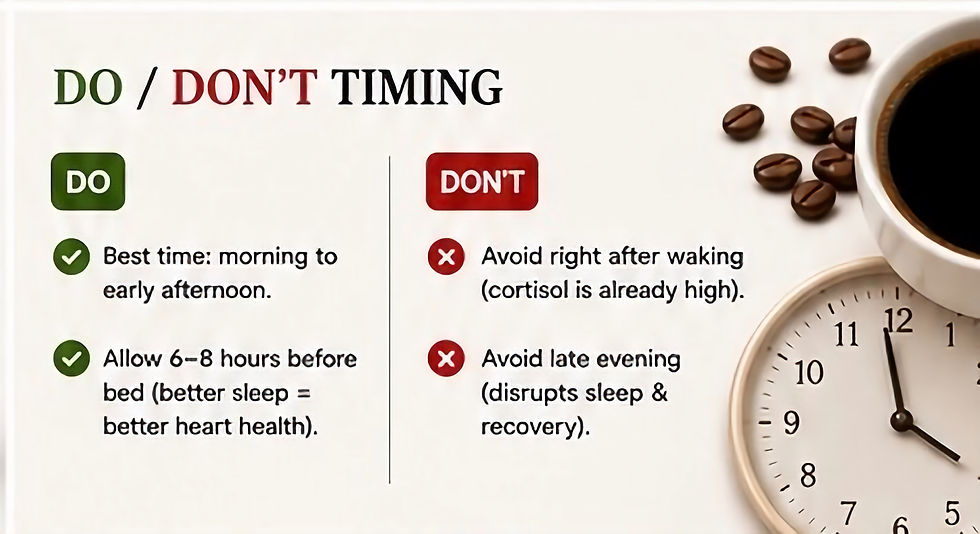
You may also want to avoid drinking coffee immediately after waking up. Your body naturally produces a surge of cortisol in the morning, and waiting an hour or two before your first cup may help you avoid an unnecessary caffeine "boost."
If coffee keeps you awake at night, leaves you feeling anxious, or makes your heart race, consider adjusting the timing before giving it up completely.
Should you check any labs?
Most people who drink coffee don't need any special blood tests.
However, if you're experiencing symptoms such as palpitations, unexplained fatigue, muscle cramps, or if you have cardiovascular risk factors, your healthcare provider may recommend checking a few key markers.
These may include:
These tests aren't necessary for everyone. If palpitations or fatigue keep coming back, the most useful next step is a conversation with your clinician, who can decide what testing is actually warranted based on your symptoms and history — most often thyroid function and a check for anemia.
Bottom line
Coffee doesn't deserve its bad reputation.

For most healthy adults, moderate coffee consumption can be part of a heart-healthy lifestyle. The key is to enjoy it in moderation, pay attention to how your body responds, and avoid letting it interfere with good sleep.
Rather than asking, "Is coffee good or bad?" a better question is:
"Is my coffee habit working for my body?"
That's exactly what evidence-based medicine is all about—making recommendations that fit the individual, not applying the same advice to everyone.



Comments